
Play Therapy in Royal Palm Beach, FL
AdAdults generally have words to describe their feelings, even if the best they can come up with is that everything feels overwhelming right now.
Kids are different.
Children don’t always have the vocabulary to explain their worries, frustrations, or emotional experiences. Give them some toys, art supplies, games, or characters to create a story with, however, and communication may come much more naturally.
That’s where Play Therapy comes in.
Play Therapy is a therapeutic approach that uses play to help children express feelings, process experiences, develop coping skills, and work through emotional and behavioral difficulties. Unlike ordinary play, it’s provided by mental health professionals with specialized training in the approach.
At Ingram & Associates, we give children the space to be themselves. Sometimes a dinosaur, a sandbox, or a box of crayons can start a conversation that words can’t.
Why Play?
Adults often work through their concerns by talking. Asking a child how they feel for an entire 50-minute appointment, however, probably isn’t going to get us very far.
Play is one of the most natural ways children communicate. It provides opportunities to explore their surroundings, express emotions, practice relationships, and develop problem-solving skills.
The toys aren’t simply there to keep children occupied. They’re an important part of the therapeutic process.
Through play, a trained therapist can explore feelings, experiences, worries, and relationship patterns that children may struggle to express verbally.
Play Therapy is most commonly used with children ages 3 to 12, although play-based techniques can be adapted for other age groups.
After all, expecting a six-year-old to have the emotional vocabulary of a 35-year-old might be asking a little much. Especially considering that some 35-year-olds are still working on theirs.
Play Therapy Is More Than Just Playing
If you were watching a Play Therapy session from the outside, you might wonder whether any actual therapy was taking place.
There might be puppets, action figures, art supplies, and some very serious negotiations involving who gets to be the dragon.
But behind those activities is a trained therapist using their understanding of child development and therapeutic techniques to support meaningful change.
Depending on your child’s individual needs, Play Therapy may be directive, nondirective, or a combination of both.
Directive Play Therapy: The therapist introduces particular activities or guides the play toward specific therapeutic goals.
Nondirective Play Therapy: The child has greater freedom to choose activities while the therapist observes, responds, and supports emotional expression.
Both approaches allow children to work through challenges in a developmentally appropriate way.
What Can Play Therapy Help?
Sometimes children are struggling because of a significant life event. Other times, parents notice that their child just doesn’t seem quite like themselves.
Play Therapy may help children experiencing:
- Anxiety or excessive worry
- Anger or aggressive behavior
- Grief and loss
- Divorce or family separation
- Trauma, abuse, or neglect
- Difficulty adjusting to change
- Behavioral concerns at home or school
- Social difficulties
- Depression or persistent sadness
- ADHD and impulse-control difficulties
- Family relationship difficulties
- Medical experiences or chronic illness
- Developmental or learning challenges
- Emotional and social challenges associated with autism
- Low self-esteem
Children don’t need to have a formal mental health diagnosis to benefit from Play Therapy.
What Happens During Play Therapy?
Every child brings a different personality, imagination, and set of experiences into the playroom. Naturally, their therapy sessions won’t all look alike.
Depending on your child’s age, needs, interests, and treatment goals, sessions may incorporate:
- Art and creative activities
- Puppets and stuffed animals
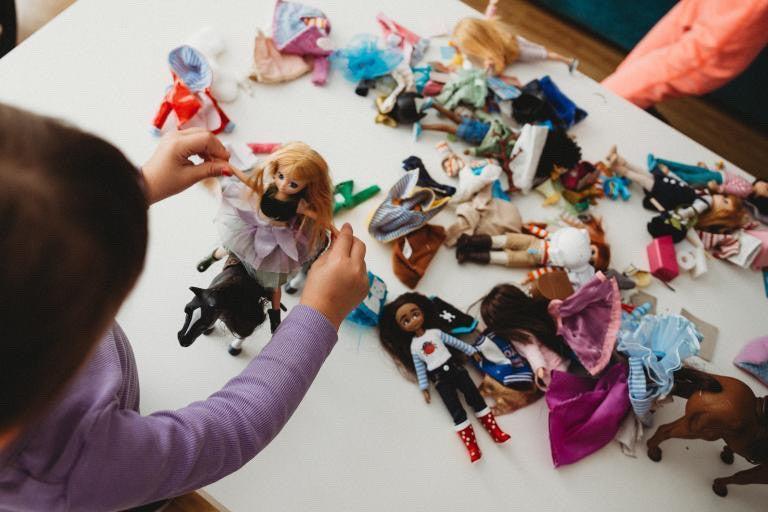
- Dolls and action figures
- Storytelling
- Role-playing
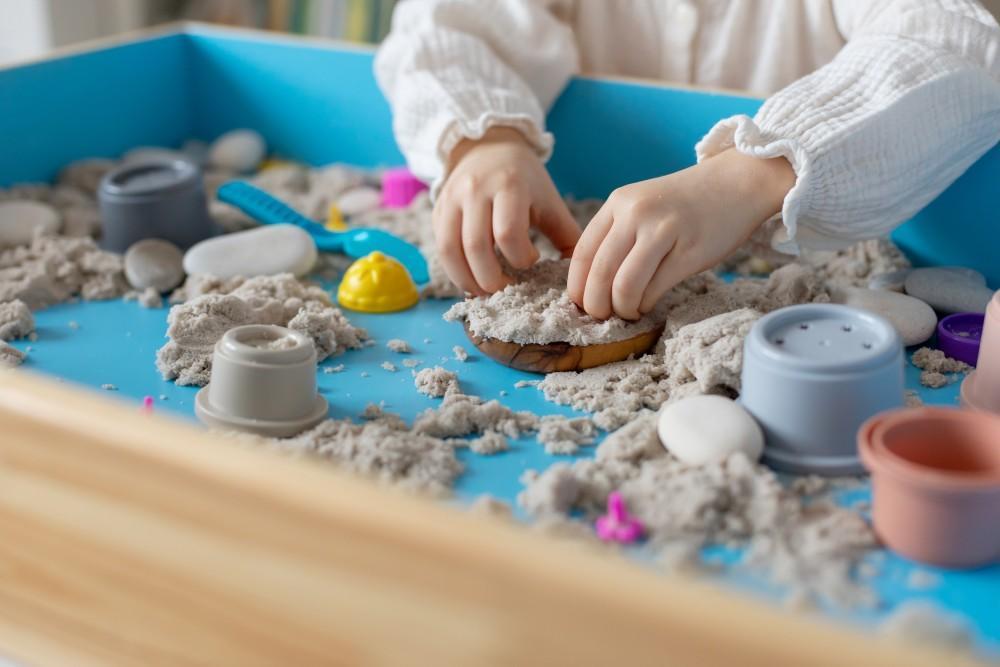
- Sand play
- Blocks and construction toys
- Board games
- Music or movement
- Imaginative play
These aren’t random activities pulled from the world’s most therapeutic-looking toy box. 😄
The therapist uses play intentionally, observing how your child communicates, approaches problems, manages frustration, expresses emotions, and interacts with others.
Through these activities, children can develop healthier coping skills, improve emotional regulation, build self-confidence, and strengthen their communication and problem-solving abilities.
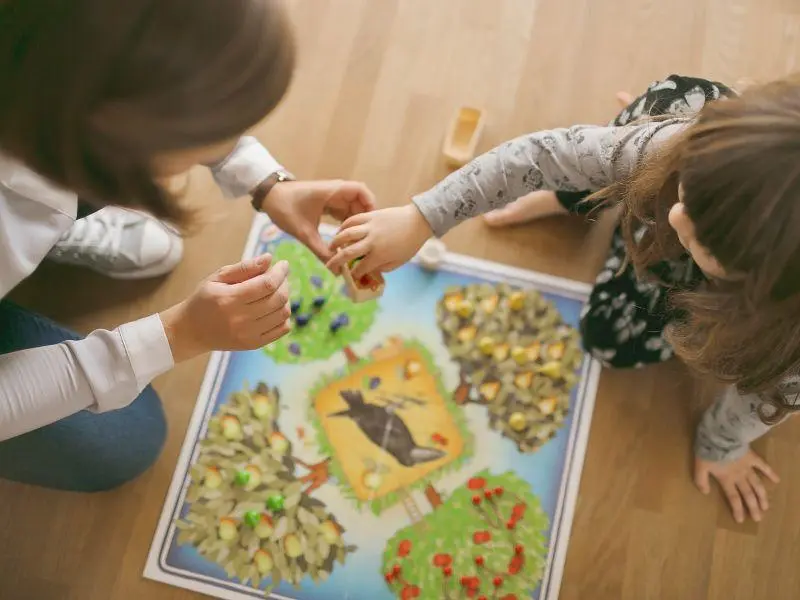
Even losing a game of Candy Land can become an opportunity to practice managing frustration. And if you’ve ever played Candy Land with a competitive child, you know there’s plenty of opportunity for that.
Your Child’s Relationship With Their Therapist Matters
Like adults, children need to feel comfortable with the person they’re working with.
A trusting therapeutic relationship allows children to explore difficult emotions without worrying about being judged, pressured, or giving the wrong answer.
Building that relationship takes time.
Some children walk into the playroom and immediately begin investigating every toy available. Others are more interested in investigating the therapist first.
Both are perfectly understandable reactions when you’re meeting an unfamiliar grown-up with an unusually large collection of toys.
Building trust is part of therapy, not something we need to rush through before therapy can begin.
What Is the Parent’s Role?
Parents and caregivers are an important part of Play Therapy. Actually, really important!
Your child’s therapist may meet with you to discuss family history, concerns, treatment goals, progress, and strategies that may be helpful at home.
And yes, we understand that parents want to know what happened during therapy.
Everything that happened during therapy.
What did they say? What did they play with? Did they talk about me? What did they say about their dad? What does that drawing mean? Why did the dinosaur eat the other dinosaur?
We get it. You care about your child and want to understand what’s happening.
But children need privacy and respect in therapy, too.
If children believe everything they say or do will immediately be reported back to their parents, they may become less comfortable expressing themselves honestly.
Your child’s therapist will explain confidentiality, what information can be shared, and when safety or other concerns require disclosure.
Privacy doesn’t mean excluding parents. It means creating an environment where your child can develop trust while keeping you appropriately involved in treatment.

Therapy Is One Hour.
Home Is the Rest of the Week.
This part matters!
A therapist sees your child for about an hour a week. We cannot “fix your kid” in that hour and send them home with the behavioral equivalent of a software update.
Much of the opportunity for meaningful change happens during those other 167 hours.
Parents and caregivers may need to make changes at home, practice strategies discussed with the therapist, reinforce new skills, establish or maintain appropriate boundaries, change patterns that aren’t working, and sometimes take a hard look at their own responses and behavior.
This isn’t about blaming parents. It’s about recognizing that children are part of a family, and progress is often supported by the people around them.
Your child’s therapist will do their part.
Your child will be doing theirs.
We need you to do yours, too.
That’s how the skills your child develops during therapy can carry over into everyday life, rather than staying neatly contained within the playroom.
How Long Does Play Therapy Take?
There isn’t a universal number of sessions.
Play Therapy appointments are generally scheduled weekly, with the overall length of treatment depending on your child’s individual needs, treatment goals, and progress.
Some children need support navigating a particular challenge or life transition. Others may need additional time to work through more complicated experiences or behavioral patterns.
Your child’s therapist will discuss their progress with you and help determine when treatment goals are being met.
Children develop at their own pace. Therapy works much the same way.

Helping Kids Find Their Way Forward
Children don’t always communicate what’s happening inside them through conversation.
Sometimes they show us through behavior.

Sometimes through a story.
Sometimes through a drawing.
And sometimes apparently through an extremely complicated scenario involving three dinosaurs, a superhero, and a plastic sandwich.
Play Therapy gives children another way to express and work through experiences that may feel too confusing, overwhelming, or complicated to explain.
At Ingram & Associates in Royal Palm Beach, FL, our therapists use Play Therapy to help children understand their emotions, develop healthier coping skills, build confidence, and strengthen their relationships.
And we’ll work with you, too, because helping a child rarely happens in isolation.
Frequently Asked Questions about Play Therapy
1. How do I explain Play Therapy to my child?
Explain that they’re going to meet someone who helps children with feelings and everyday challenges through toys, games, and activities. There’s no need to make it sound like another doctor’s appointment.
2. What if my child doesn’t want to go?
It’s not unusual for children to feel hesitant about meeting someone new. Their therapist will help them become familiar with the environment and develop a trusting relationship at their own pace.
3. What if my child says nothing is wrong?
Children don’t always recognize or understand what they’re struggling with. They don’t need to identify a specific problem before benefiting from Play Therapy.
4. What if my child says they just played the whole time?
That’s not unusual, either. Your child may experience the appointment as play while their therapist is intentionally supporting emotional expression and skill development.
5. Will I be in the playroom with my child?
That depends on your child’s needs and the therapeutic approach. Parents may participate in certain sessions or meet separately with the therapist.
6. How will I know if Play Therapy is working?
You may notice improvements in how your child communicates, manages frustration, handles changes, or interacts with others. Your child’s therapist will also discuss progress with you.
7. What if my child behaves differently at home than at school?
Children often respond differently depending on their surroundings. The child who receives glowing reports from their teacher may be the same child who has a meltdown because you cut their sandwich incorrectly.
Sharing observations from both environments can help the therapist develop a better understanding of your child.
8. Can siblings participate in Play Therapy together?
Depending on treatment goals, siblings may sometimes participate in shared activities or family sessions. Your therapist can help determine whether this would be beneficial.
9. What if my child’s behavior temporarily gets worse?
Progress isn’t always consistent. Children may experience difficult emotions while working through challenges. Significant behavioral changes should be discussed with your child’s therapist.
10. Is Play Therapy a replacement for discipline?
No. Children still need healthy boundaries, consistency, and appropriate expectations. Play Therapy helps them develop the emotional and behavioral skills necessary to navigate those expectations.
It’s also important that therapy is never used as a threat or punishment at home. Saying things like “I’m going to tell Ms. Katie what you did!” during a difficult moment can unintentionally make your child associate therapy with getting in trouble.
We want your child to see their therapist as someone they can trust, not another grown-up they need to worry about disappointing.
Of course, we encourage parents to share behavioral concerns with their child’s therapist privately.
Therapy should be a safe place to work through mistakes, not a consequence for making them.
11. Can teenagers benefit from Play Therapy?
Yes. Therapists can incorporate developmentally appropriate games, creative activities, and play-based techniques when working with older children and teenagers.
12. How is Play Therapy different from playing with my child at home?
Playing with your child at home is valuable for building connection. Play Therapy differs because a trained mental health professional uses therapeutic techniques to address specific emotional, behavioral, and developmental goals.