

What Is EMDR Therapy?
Eye Movement Desensitization and Reprocessing (EMDR) is a structured psychotherapy approach designed to help people process distressing memories and experiences that continue to affect them.
Sometimes the brain doesn’t fully process an overwhelming experience. Even when you know something is in the past, reminders can bring back the emotions, physical sensations, or beliefs associated with it.
EMDR helps the brain revisit and reprocess those experiences in a more adaptive way, so they become less distressing in everyday life.
The goal isn’t to erase a memory. It’s to change how that memory affects you today.
How Does EMDR Work?
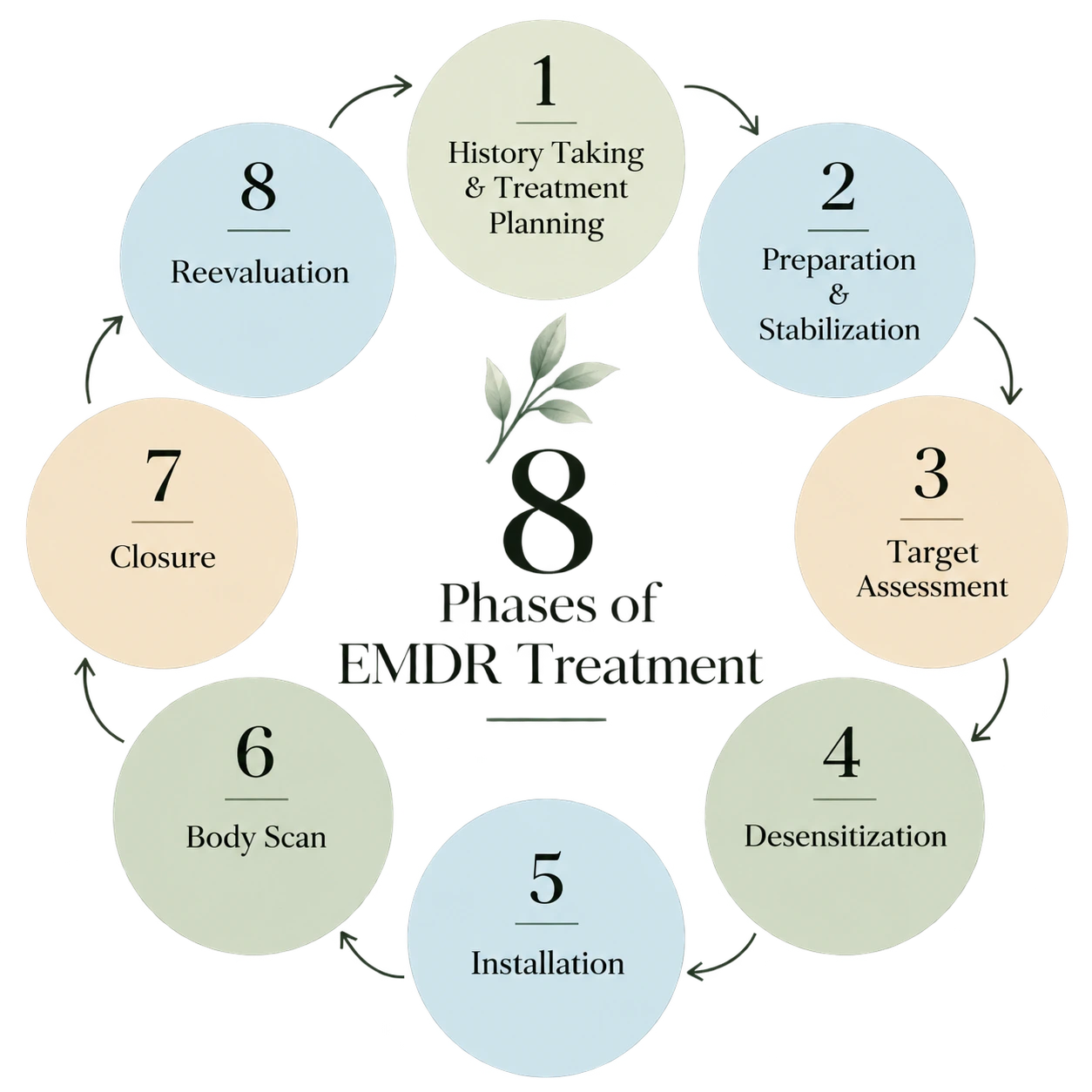
EMDR uses a structured, eight-phase treatment approach that includes understanding your history, preparing for memory processing, identifying treatment targets, and evaluating progress.
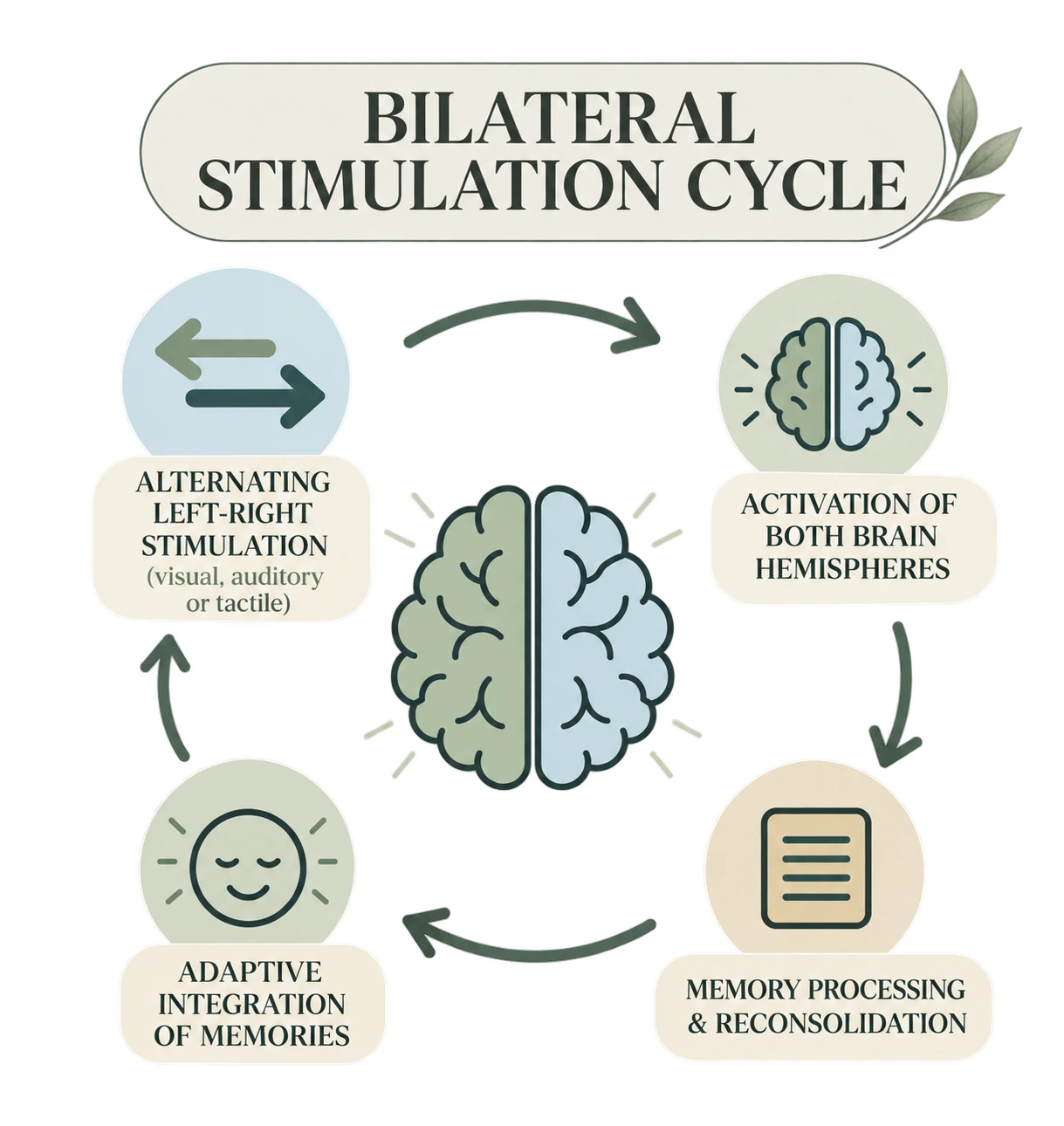
During certain phases, your therapist guides you through bilateral stimulation—often side-to-side eye movements, alternating taps, or sounds—while you briefly focus on aspects of a distressing memory.
This process can help reduce the emotional intensity associated with the experience and support more adaptive beliefs about yourself.
EMDR isn’t hypnosis. You’re awake, aware, and involved throughout the process.
What Can EMDR Help With?
EMDR is best known for treating post-traumatic stress disorder (PTSD), but clinicians may also consider it for other concerns involving distressing memories or experiences.
These may include:
- Traumatic experiences and PTSD
- Distressing childhood experiences
- Anxiety associated with past events
- Negative beliefs about yourself
- Grief involving traumatic circumstances
- Memories that continue to trigger strong emotional reactions
Not every concern requires EMDR, and not everyone will benefit from the same treatment approach.
Do I Have to Talk About Everything That Happened?
Not necessarily.
One aspect of EMDR that many people appreciate is that you generally don’t have to describe every detail of a painful experience out loud.
Your therapist still needs enough information to understand your concerns, assess whether EMDR is appropriate, and develop a treatment plan. But processing doesn’t require repeatedly telling your entire story.
You also won’t be expected to begin memory processing during your first appointment.
What Are the Eight Phases of EMDR?
EMDR follows eight phases, although the time spent in each phase varies depending on the person.
- History Taking & Treatment Planning — Understanding your concerns, experiences, and goals.
- Preparation — Building trust, explaining the process, and developing strategies for managing distress.
- Assessment — Identifying a target memory and the thoughts, emotions, and sensations associated with it.
- Desensitization — Using bilateral stimulation while processing the targeted experience.
- Installation — Strengthening a more adaptive, positive belief.
- Body Scan — Checking for remaining physical distress associated with the memory.
- Closure — Helping you return to a stable state at the end of the session.
- Reevaluation — Reviewing progress and determining what needs attention next.
These phases provide structure, but EMDR isn’t a race through a checklist. Preparation and pacing matter.
Is EMDR Right for Everyone?
No—and that’s okay.
Before beginning EMDR, your therapist considers your symptoms, history, current stability, coping resources, and treatment goals.
Some people benefit from additional preparation before processing difficult memories. Others may find that another therapeutic approach is a better fit.
Effective therapy isn’t about choosing the trendiest technique. It’s about choosing what makes sense for you.

EMDR Therapy in Royal Palm Beach & Online Across Florida
Ingram & Associates offers EMDR therapy in person at our Royal Palm Beach office and through telehealth for clients throughout Florida.
Your therapist can help you understand whether EMDR is appropriate for your concerns and how it may fit into your overall treatment plan.
Learn more about our EMDR counseling services and Trauma & PTSD Counseling to explore your options.