

Cognitive Behavioral Therapy (CBT) in Royal Palm Beach, FL
Sometimes the way we think about a situation can make it feel even harder than it already is. One thought leads to another, emotions kick in, we react—and before long, we’re caught in a pattern that seems to run on autopilot. Unfortunately, autopilot doesn’t always know where it’s going.
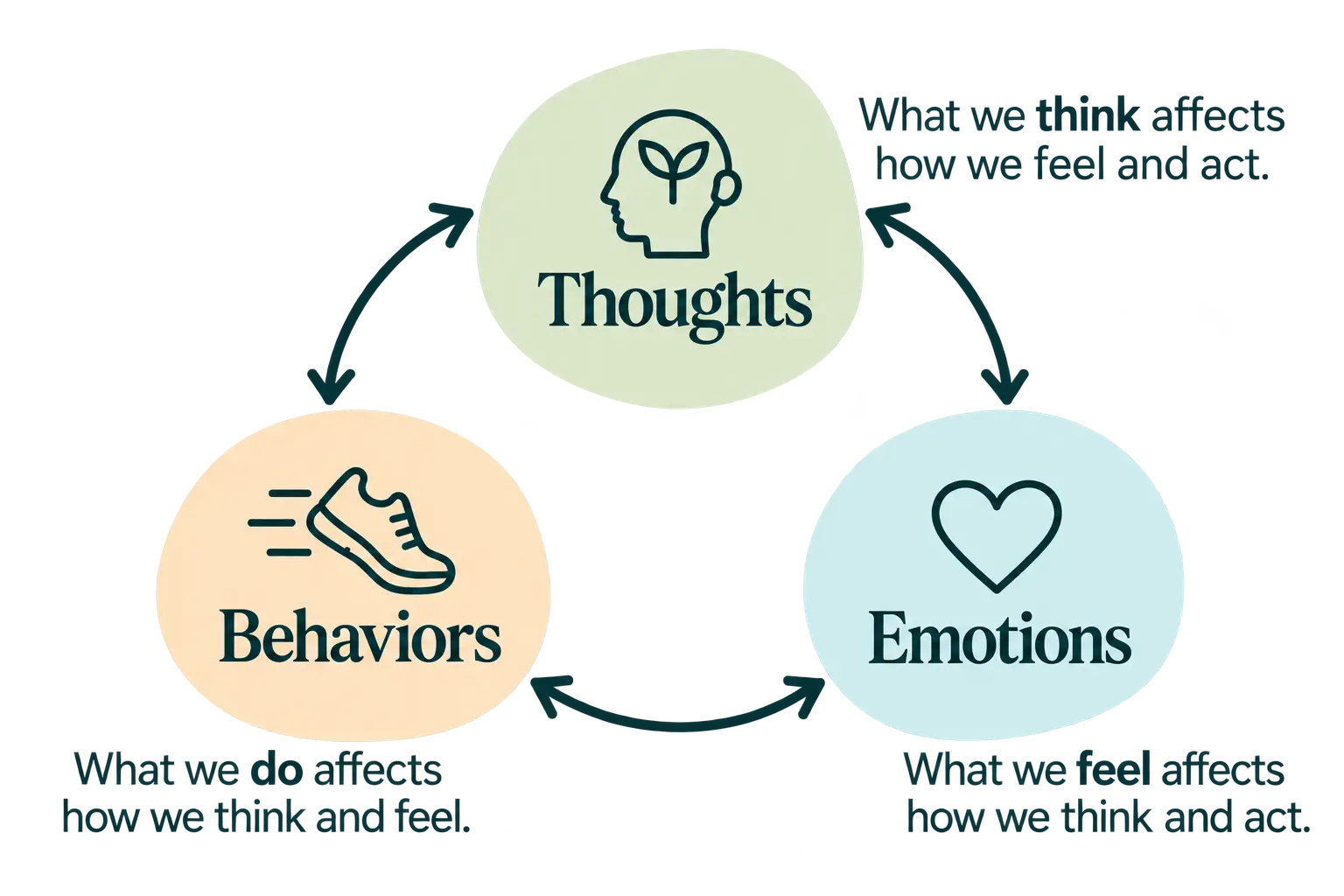
Cognitive Behavioral Therapy (CBT) helps you slow that process down and take a closer look at the connection between your thoughts, feelings, and behaviors.
The idea isn’t to “think positive” or convince yourself that everything is fine when it isn’t. CBT helps you recognize patterns that aren’t serving you, question assumptions that may not be accurate, and practice different ways of responding.
Over time, those small changes can make a surprisingly big difference in how you handle difficult situations, emotions, and everyday life.
How Does CBT Work?
CBT focuses on what’s happening in the present and looks for patterns between what you think, how you feel, and what you do.
For example, you might assume a conversation went badly, start worrying that someone is upset with you, and then avoid reaching out. That avoidance may bring some temporary relief—but it can also reinforce the original worry. Before you know it, one uncomfortable thought has recruited an entire supporting cast.
In CBT, you learn to notice those patterns and examine them more closely. You might work with your therapist to question an automatic thought, consider other explanations, try a different behavior, or practice a skill between sessions.
The goal isn’t to replace every negative thought with a positive one. It’s to develop more accurate and useful ways of thinking and responding so old patterns don’t automatically get the final say.
What Can CBT Help?
CBT is used for a wide range of concerns because the patterns it addresses—overthinking, avoidance, self-criticism, unhelpful assumptions, and automatic reactions—can show up in many different parts of life.
CBT may be helpful for:
- Anxiety and excessive worry
- Depression and low mood
- Panic attacks
- Phobias and fears
- Stress and feeling overwhelmed
- Low self-esteem and negative self-talk
- Anger and difficulty managing emotions
- Relationship and communication patterns
- Adjusting to difficult life changes
You don’t need to recognize yourself in every item on that list. CBT is less about fitting into a particular box and more about identifying the patterns that are getting in your way—and figuring out what you can do differently.
What to Expect From CBT
CBT tends to be practical and collaborative. You and your therapist will work together to identify patterns you want to change and develop strategies you can actually use outside the therapy room.
Sessions might include looking at a recent situation, identifying the thoughts and emotions that came up, and exploring how they influenced what you did next. You may also practice new skills or try something between sessions to see what happens in real life.
And no, your therapist isn’t going to hand you a red pen and start grading your thoughts. The point is to become more curious about them—not critical of yourself for having them.
As you practice, recognizing these patterns can become easier, giving you more choice in how you respond instead of automatically falling back into old habits.
FAQs
1. Is CBT just positive thinking?
No. CBT isn’t about pretending everything is fine, looking on the bright side, or convincing yourself that the dumpster fire is actually a cozy little campfire.
2. Do I have to do homework in CBT?
Sometimes there may be things to practice between sessions, but we’re not talking about worksheets due Friday with points deducted for late work. 😄 You might try a new coping strategy, track a pattern, practice a skill, or approach a situation differently and talk about what happened at your next session.
3. How long does CBT take?
There’s no set number of sessions that works for everyone. CBT is often structured around specific concerns and goals, but the length of therapy depends on what you’re working on, how those patterns affect your life, and the progress you’re making.
4. What happens during a CBT session?
You’ll talk with your therapist about situations that have been difficult and look at the thoughts, emotions, and behaviors connected to them. Together, you may identify patterns, question assumptions, develop coping strategies, or experiment with different ways of responding.
5. Can CBT help with anxiety?
Yes. CBT is commonly used to address anxiety and can help you recognize patterns such as catastrophic thinking, overestimating danger, avoidance, and the endless parade of “what ifs.” Therapy can then help you develop different ways of thinking about and responding to those situations.
6. Can CBT help with depression?
CBT can also be used to treat depression. Therapy may focus on patterns such as harsh self-criticism, hopeless thinking, withdrawing from activities, or getting stuck in cycles that reinforce a low mood.
7. Is CBT right for everyone?
No single therapy approach is the right fit for every person or every concern. Your therapist can help determine whether CBT makes sense for what you’re experiencing or whether another approach—or a combination of approaches—may be more useful.