

Cognitive Processing Therapy (CPT) in Royal Palm Beach, FL
When Your Brain Keeps Rewriting the Story
Ever find yourself replaying something that happened years ago and wondering what you could have done differently?
Maybe you think, “I should have seen it coming,” or “If I’d made a different decision, none of this would have happened.”
Your brain can be remarkably good at playing detective after the fact. Unfortunately, it doesn’t always reach a fair verdict.
After a traumatic experience, the way you think about yourself, other people, and the world can change. Cognitive Processing Therapy (CPT) helps you take a closer look at those beliefs and begin separating what happened from what you’ve come to believe it means about you.
What Is Cognitive Processing Therapy (CPT)?
CPT is an evidence-based form of cognitive behavioral therapy developed to help people recover from post-traumatic stress disorder (PTSD).
It focuses on how traumatic experiences can affect your thoughts and beliefs, particularly around safety, trust, control, self-esteem, and relationships.
Sometimes trauma leaves people carrying beliefs like:
- “It was my fault.”
- “I can’t trust anyone.”
- “I’m never going to feel safe again.”
- “I should have been able to prevent it.”
- “Something must be wrong with me.”
These thoughts can feel like facts, especially when you’ve been carrying them for a long time. CPT helps you examine them with greater perspective and compassion.

When Trauma Leaves You Stuck
In CPT, certain thoughts are called “stuck points.” They’re beliefs that can keep you feeling trapped in guilt, shame, fear, or self-blame.
For example, you might know logically that you couldn’t have predicted what happened, yet still feel responsible for not preventing it.
Or you may have learned to treat every situation as potentially dangerous because something terrible happened once.
CPT doesn’t ask you to pretend the trauma wasn’t serious. It helps you recognize when the conclusions you’ve drawn from it may be making life harder than it needs to be.
How Does CPT Work?
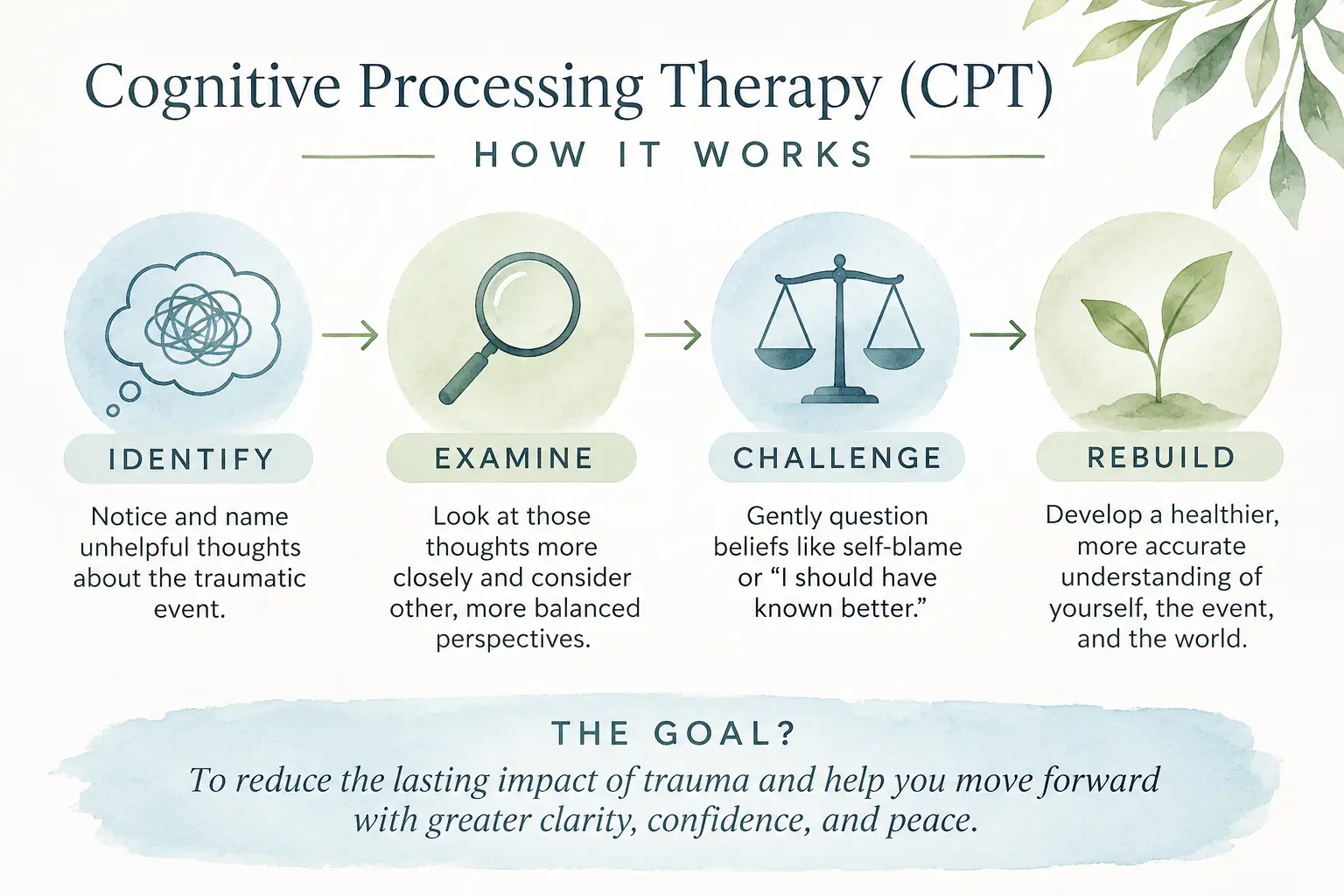
CPT is a structured, goal-oriented therapy that typically involves identifying stuck points, examining unhelpful thinking patterns, and practicing more balanced ways of understanding your experiences.
You and your therapist may work on:
- Recognizing beliefs connected to the trauma
- Exploring guilt, shame, and self-blame
- Questioning assumptions that no longer serve you
- Rebuilding trust in yourself and others
- Developing a more balanced sense of safety and control
- Understanding how trauma has affected your relationships
CPT often includes worksheets and exercises between sessions. Think of it as giving your brain something more useful to do than replaying the same argument with the past.
Do You Have to Relive Everything That Happened?
This is one of the biggest concerns people have about trauma therapy.
CPT involves discussing how the experience has affected your beliefs, but you don’t necessarily have to describe every traumatic detail or repeatedly retell the entire event.
Your therapist will explain the process and help you understand what to expect.
The goal isn’t to make you relive the past. It’s to help the past have less control over your present.
Making Room for a Different Perspective
CPT isn’t about convincing yourself that everything is wonderful or that nothing bad will ever happen again.
It’s about moving away from rigid beliefs like “Nobody can be trusted” toward more balanced ones, such as “Some people have hurt me, but that doesn’t mean everyone will.”
The experience doesn’t disappear. But the guilt, fear, and assumptions surrounding it may begin to loosen their grip.
And that can make room for something important: the ability to move forward without feeling like you’re constantly answering for what happened.

You Are More Than What Happened to You
At Ingram & Associates Counseling & Consulting in Royal Palm Beach, FL, we understand that trauma can affect how you see yourself, your relationships, and the world around you.
Cognitive Processing Therapy offers a structured way to challenge the beliefs that keep you stuck and develop a healthier perspective on your experiences.
You can’t rewrite the past. But you can work toward changing how much influence it has over your future.
Frequently Asked Questions About CPT
1. How long does Cognitive Processing Therapy take?
CPT typically involves around 12 sessions, although treatment length can vary depending on your needs and progress.
2. Can CPT help with trauma that happened decades ago?
Absolutely. Trauma doesn’t have an expiration date, and neither does the opportunity to heal.
3. Do I need a PTSD diagnosis to benefit from CPT?
4. What if I’ve experienced more than one traumatic event?
CPT can address the effects of multiple traumatic experiences, including beliefs that have developed over time.
5. What if I understand logically that it wasn’t my fault but still feel guilty?
That’s actually one of the things CPT is designed to address. Sometimes your brain and your emotions aren’t quite on the same page.
6. Can CPT help if I don’t remember everything that happened?
You don’t need a perfectly detailed memory of the experience. CPT focuses on how trauma has affected your thoughts, beliefs, and emotions.
7. Is CPT the same as EMDR?
8. What if I’ve tried therapy before and still feel stuck?
Different therapeutic approaches work in different ways. CPT offers a structured approach that may help address beliefs that previous therapy hasn’t fully resolved.