
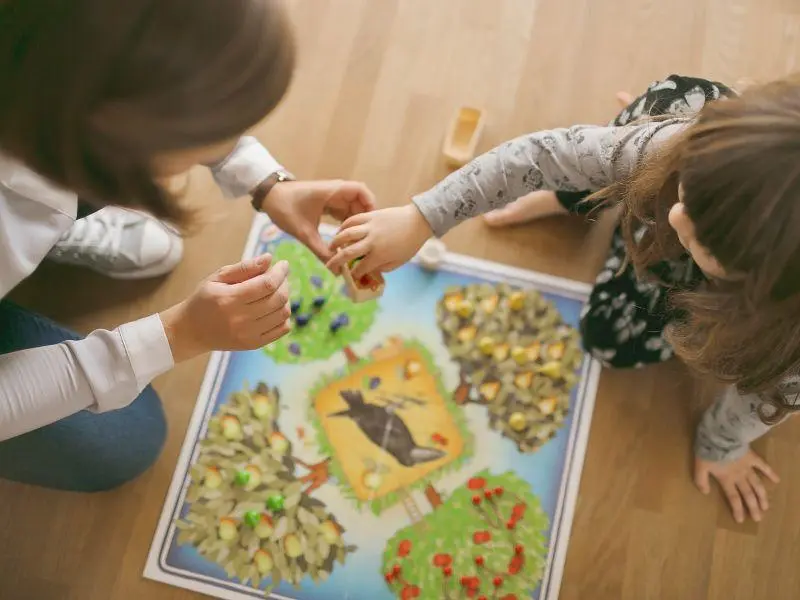
Play Therapy in Royal Palm Beach, FL
Adults usually have words for what they’re feeling—even if sometimes those words are just, “I don’t know, everything is a lot right now.”
Kids are different.
Children don’t always have the language or developmental ability to sit down and explain what they’re worried about, why they’re angry, or what has changed inside them. But give them toys, art supplies, characters, games, or a story to create, and they often communicate in ways that feel much more natural.
That’s where play therapy comes in.
Play therapy is a therapeutic approach that uses play to help children express feelings, process experiences, develop coping skills, and work through emotional or behavioral difficulties in a way that fits how children naturally communicate and learn. It is different from ordinary play and is provided by mental health professionals with specialized training in the approach.
At Ingram & Associates, we create a safe, supportive environment where children can be children—because sometimes a dinosaur, a sandbox, or a box of crayons can start a conversation that words can’t.
Why Play?
For adults, therapy often involves talking.
For children, asking “So, how does that make you feel?” for 50 minutes isn’t exactly a winning strategy.
Play is one of the primary ways children explore their world, communicate experiences, practice relationships, solve problems, and express emotions.
In play therapy, the toys and activities aren’t there simply to keep a child entertained while the adults talk. They’re part of the therapeutic process.
Through play, a trained therapist can begin to understand themes, feelings, relationships, worries, and experiences that a child may have difficulty expressing directly.
And because the process happens at the child’s developmental level, therapy can feel much more natural than expecting a six-year-old to suddenly develop the emotional vocabulary of a 35-year-old.
Play Therapy Is More Than Just Playing
From the outside, a play therapy session can sometimes look like…well, playing.
There might be dolls, action figures, blocks, puppets, art supplies, games, sand, stories, or some very serious negotiations involving who gets to be the dragon.
But play therapy is a structured therapeutic approach—not recreational play or childcare. The therapist uses their clinical training and understanding of child development to select, observe, and participate in play in ways that support the child’s therapeutic goals.
Depending on the child and the approach being used, play therapy may be directive, where the therapist introduces particular activities or guides the play toward a therapeutic goal, or nondirective, where the child has greater freedom to choose how they play while the therapist observes and responds therapeutically.
What Can Play Therapy Help?
Children can struggle for all kinds of reasons. Sometimes something significant has happened. Other times parents simply notice that their child doesn’t quite seem like themselves.
Play therapy may be used with children experiencing concerns such as:
- Anxiety or excessive worry
- Anger or aggressive behavior
- Grief and loss
- Divorce or family separation
- Trauma or frightening experiences
- Difficulty adjusting to change
- Behavioral concerns at home or school
- Social difficulties
- Depression or persistent sadness
- Attention or impulse-control difficulties
- Family relationship difficulties
- Medical experiences or chronic illness
- Developmental or learning challenges
The existing Ingram & Associates program also identifies concerns including ADHD, autism spectrum disorder, developmental delays, school difficulties, abuse or neglect, and other social, emotional, behavioral, and developmental challenges.
What Happens During Play Therapy?
Every child is different, which means every play therapy session won’t look exactly the same.
Depending on your child’s age, needs, personality, and treatment goals, sessions may incorporate:
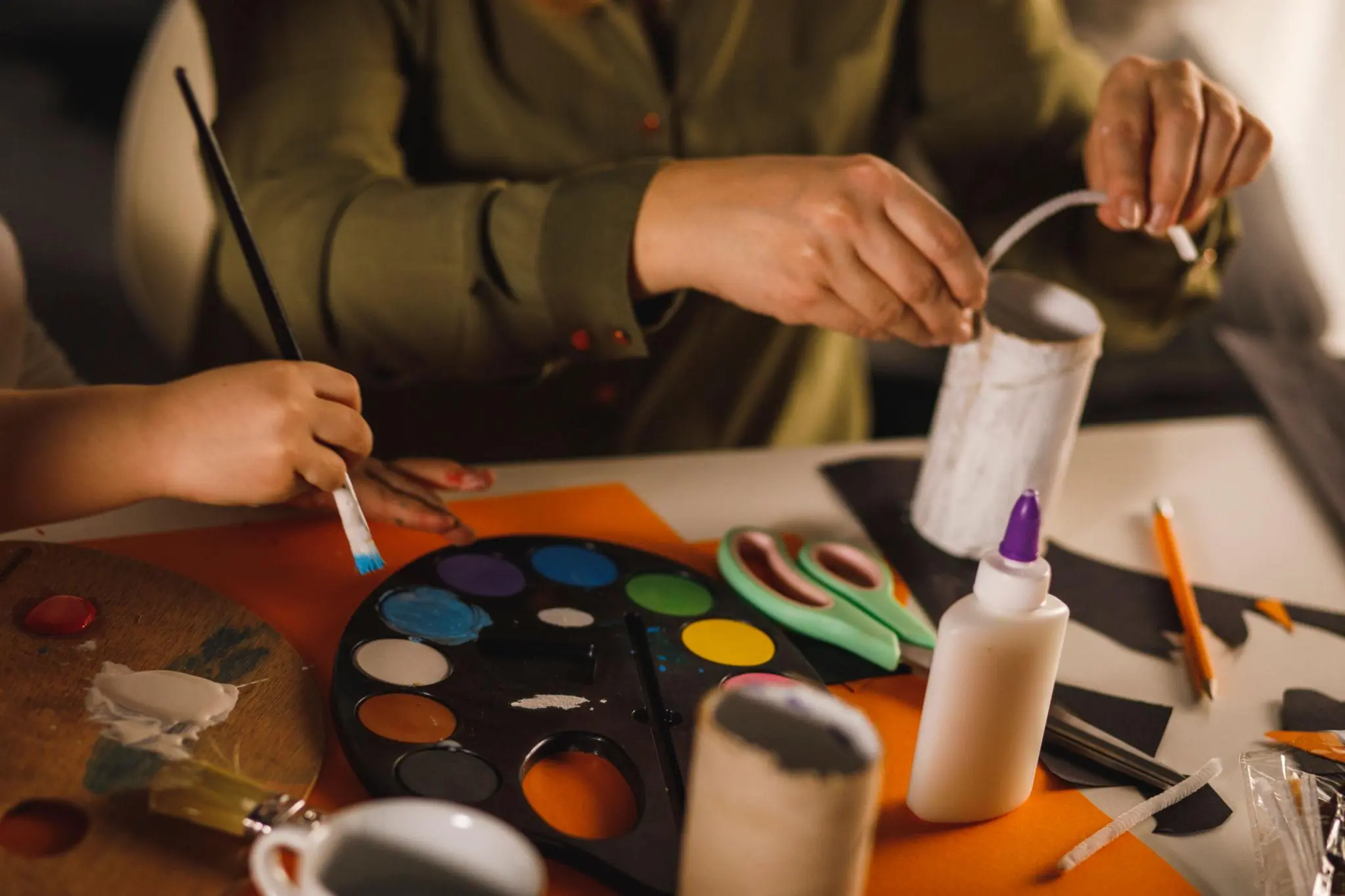
- Art and creative activities
- Puppets and stuffed animals
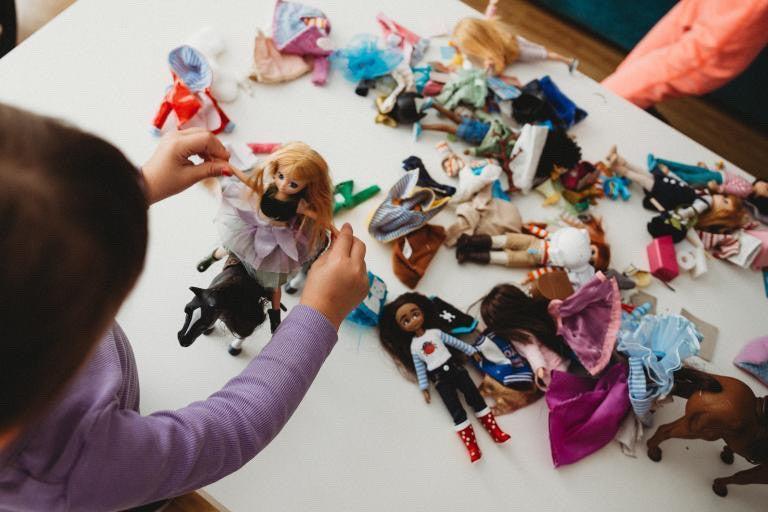
- Dolls and action figures
- Storytelling
- Role-playing
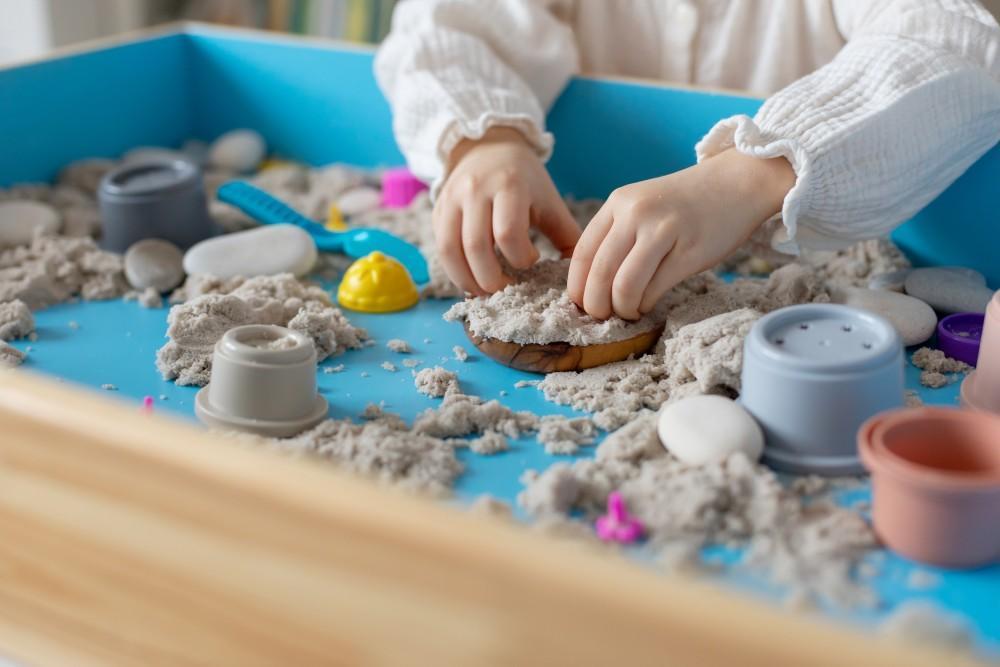
- Sand play
- Blocks and construction toys
- Board games
- Music or movement
- Imaginative play
These aren’t random activities pulled from the world’s most therapeutic-looking toy box. 😄
The therapist uses play intentionally while paying attention to how the child communicates, solves problems, handles emotions, interacts, and responds to different situations. The existing service describes many of these same techniques as part of the play therapy process.
Your Child’s Relationship With Their Therapist Matters
Just like adults, children need to feel safe with the person they’re working with.
A strong therapeutic relationship gives a child room to explore difficult emotions and experiences without feeling judged, pressured, or expected to say the “right” thing. The existing program likewise emphasizes creating a safe therapist-client relationship in which children can express what is bothering them naturally.
That relationship usually takes time.
Some kids walk into a room and immediately start exploring everything in sight.
Others need to investigate the therapist for a while first.
Both are perfectly reasonable approaches when you’re a kid meeting a new grown-up with an unusually large collection of toys.
What Is the Parent’s Role?
Parents and caregivers are an important part of play therapy. Actually, really important!
Your child’s therapist may meet with you to understand what’s happening at home, learn about family history, discuss concerns, establish treatment goals, and talk about changes you’re noticing along the way.
And yes—we know parents want to know what happened in the therapy room.
Everything that happened in the therapy room.
What did they say? What did they play with? Did they talk about me? What did they say about their dad? What does that drawing mean? Why did they make the dinosaur eat the other dinosaur?
We get it. You care about your child and you want to know what’s going on.
But children need privacy and respect in therapy, too.
If a child believes everything they say or do will immediately be reported back to a parent, it can become much harder for them to feel safe enough to express themselves honestly. Your child’s therapist will explain what information can be shared with you, what should remain private, and when safety or other concerns require information to be disclosed.
Privacy doesn’t mean parents are shut out of the process. It means we’re creating enough space for your child to develop trust and actually use therapy.

Therapy Is One Hour.
Home Is the Rest of the Week.
This part matters!
A therapist sees your child for about an hour a week. We cannot “fix your kid” in that hour and send them home with the behavioral equivalent of a software update.
Real change also happens during the other 167 hours.
Parents and caregivers may need to make changes at home, practice strategies discussed with the therapist, reinforce new skills, establish or maintain appropriate boundaries, change patterns that aren’t working, and sometimes take a hard look at their own responses and behavior.
That isn’t about blaming parents. It’s because children exist within families, and lasting change usually works better when the people around them are willing to participate in it.
Your child’s therapist will do their part.
Your child will be doing theirs.
We need you to do yours, too.
That’s when therapy becomes something that extends beyond the playroom and starts making a difference in everyday life.
How Long Does Play Therapy Take?
There isn’t a universal number of sessions.
The existing program generally describes sessions as occurring weekly, while the overall length of treatment depends on the child and their response to therapy.
Some children may need support with a specific concern or transition. Others may be working through experiences or patterns that require more time.
Your child’s therapist will consider their needs, treatment goals, progress, and circumstances when discussing what ongoing therapy may look like.
Kids develop on their own timelines.
Therapy tends to work that way too.
Helping Kids Find Their Way Forward
Children don’t always tell us what’s happening inside them with words.
Sometimes they show us through behavior.
Sometimes through a story.
Sometimes through a drawing.
And sometimes apparently through an extremely complicated scenario involving three dinosaurs, a superhero, and a plastic sandwich.
Play therapy gives children another language for working through the things that feel too confusing, overwhelming, or complicated to explain.
At Ingram & Associates in Royal Palm Beach, our therapists use play therapy to help children express themselves, develop healthier coping skills, understand their emotions, and build confidence in themselves and their relationships.
And we’ll work with you, too—because helping a child rarely happens in isolation.